
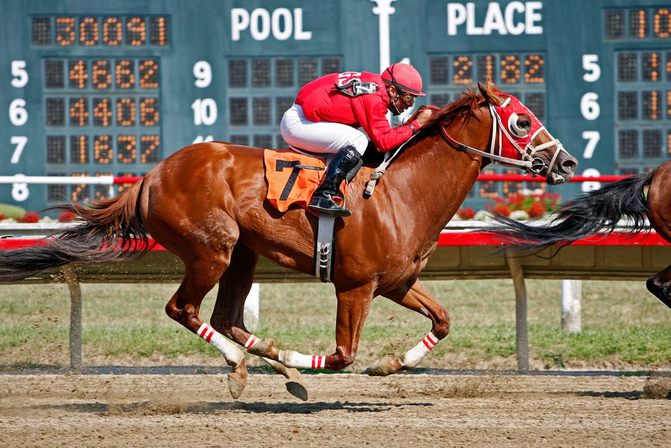
For some people, placing a bet is about more than hoping for a favorable outcome; it can feel like making a personal prediction about what will happen next. This perspective often develops from watching patterns, following statistics, and forming expectations based on previous results. Diwa Vip platform can fit into this process, giving bettors a place to turn observations and predictions into wagers. The appeal lies in the feeling that careful analysis can make uncertain events seem more understandable or predictable. However, forecasting and betting are not the same, since even well-researched predictions remain vulnerable to chance and unexpected developments. Understanding this distinction reveals why betting can resemble personal forecasting for some people.
The Role of Information in Predictions

People who approach betting as forecasting often believe their decisions are based on information rather than pure chance. In sports, for example, someone may compare a team’s current form with its historical performance or examine how particular players have performed against certain opponents. These observations can create a structured expectation about an upcoming result. However, information does not eliminate uncertainty. Unexpected injuries, strategy changes, poor performances, and other unpredictable factors can affect an event even when a prediction seems well supported.
Why Personal Judgment Matters
 Personal judgment matters because individuals interpret the same information differently. Two people can examine identical statistics and reach different conclusions about the most probable outcome. One might place greater importance on recent performance, while another considers long-term records more meaningful. This makes personal forecasting subjective. The decision is not simply a calculation of facts.
Probability and the Perception of Control
Treating betting as forecasting can also strengthen the perception of control. When people research an event and make a reasoned prediction, the activity may feel more analytical than random. Probability can reinforce this impression because it provides a mathematical way to describe uncertainty. A probability estimate, however, does not guarantee an outcome. Even a highly likely event can fail to occur. Understanding this distinction matters because a forecasting process can improve decision structure without changing the event’s fundamentally uncertain nature.
When Forecasting Becomes Part of Betting Behavior
For some people, forecasting becomes an important part of how they understand their betting activity. They may focus on identifying patterns, evaluating information, and comparing their expectations with actual results. Over time, this can make betting feel like a continuing process of prediction and evaluation. Yet repeated success or failure does not necessarily prove that someone can reliably predict future outcomes. Random variation can produce winning or losing sequences, while confidence in a personal forecasting method can sometimes outweigh the evidence supporting it.
Betting can resemble personal forecasting because both activities involve evaluating information and forming expectations about uncertain future events. The difference is that betting connects those expectations to financial stakes, making the consequences of an incorrect prediction more significant. While analysis, probability, and personal judgment can shape how people approach betting, uncertainty remains central to the process. Understanding that distinction helps explain why betting may feel analytical while still involving outcomes that cannot be predicted with certainty.